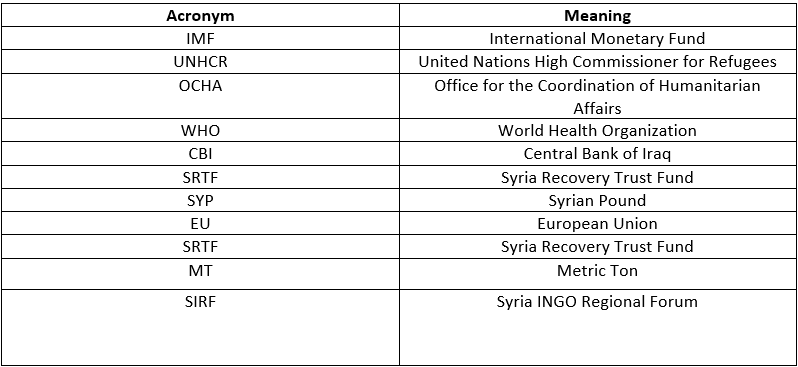
1. Table of Acronyms
2. Introduction
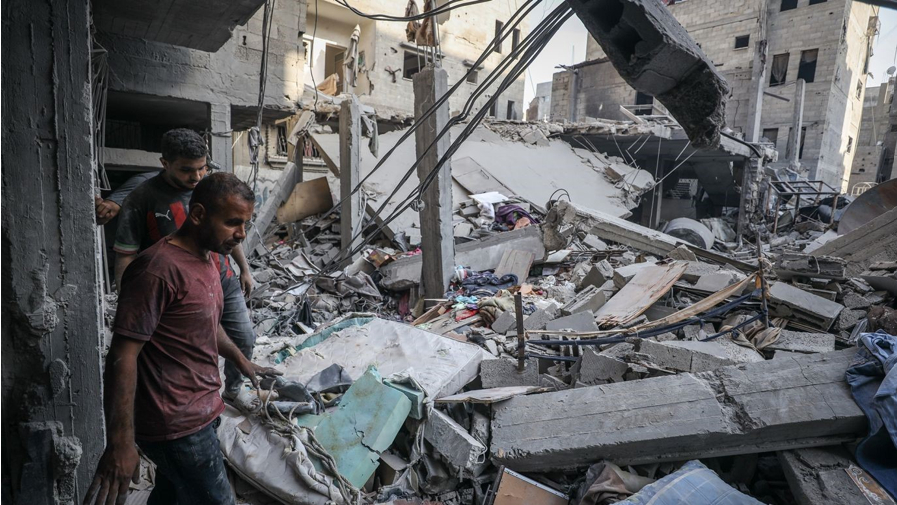
The Occupier is currently creeping into Gaza destroying anything that it deems a threat. Breakdown in communications is being observed as the truth of what is really happening is being muted. The humanitarian situation is worsening for the Palestinians living in Gaza to the point that some walk barefoot trying to escape the massacre. All this happens under the watchful eyes of the international community who till now is unable to prevent what is happening.
3. The Socio-Economic Situation
Egypt
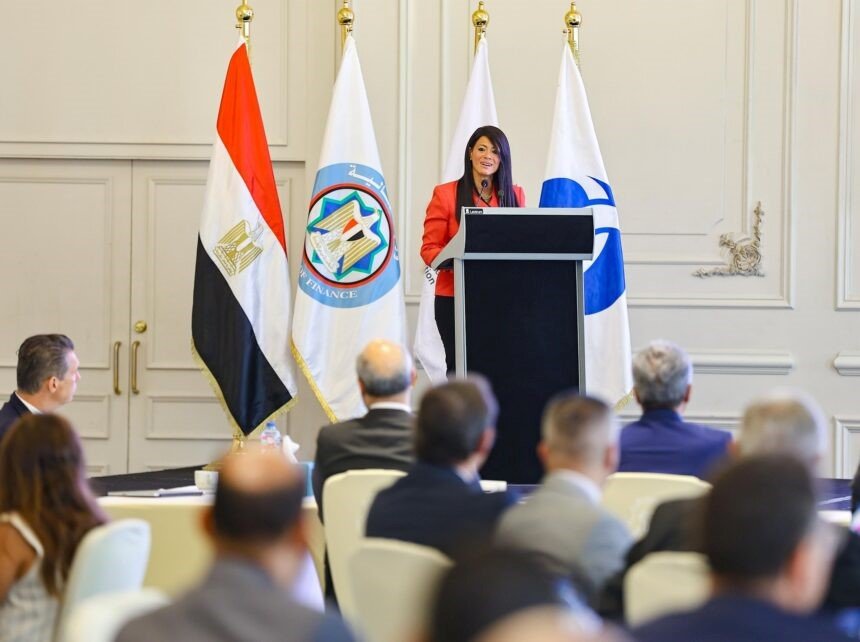
EBRD partners with Egypt to launch new PPP project preparation facility. Photo credit: dailynewsegypt.com
According to the National Economic Narrative, Egypt aims to reduce its public debt-to-GDP ratio to 55% by 2050. It has developed three scenarios for the debt ratio by 2030: a 70% reform scenario, a conservative scenario assuming 85%, and a baseline scenario without reforms at 80%. The plan is to raise the growth rate to 8% by 2050 under the reform scenario and to around 7% by 2030, compared to 6% in the baseline scenario, and to improve the efficiency of debt management, according to the National Economic Development Narrative. The Egyptian government also aims to reduce the trade deficit under the accelerated reform scenario to $14.9 billion in 2030, 48% lower than the $50 billion deficit projected under the current scenario, and shift to a $15 billion surplus by 2050. The projected value of commodity exports is expected to reach $100 billion by 2030 under the reform scenario, compared to 80% in the current scenario, and reach $175 billion by 2050. The Egyptian government aims to achieve net foreign direct investment (FDI) of $100 billion by 2050 under the reform scenario, and aims to achieve investments of $24.6 billion in 2030, compared to $20.5 billion in the current scenario. In a related development, the Egyptian government expects net foreign direct investment to decline by 3.6% during the past fiscal year, reaching $10.7 billion, compared to $11.1 billion in 2023-24, excluding the Ras Al-Hikma deal. The National Economic Development Plan aims to increase the number of tourists to 28 million by 2030 and 50 million by 2050, compared to 18.9 million during the current fiscal year. It also aims to increase tourism’s contribution to GDP to 4.7% under the reform scenario, compared to 4.1% in the current fiscal year.
In another bid to increase state revenue the Ministry of Finance and the European Bank for Reconstruction and Development (EBRD) launched a new mechanism for preparing public-private partnership (PPP) projects. According to Rania Al-Mashat Minister of Planning, Economic Development and International Cooperation, the partnership would provide technical and financial support for implementing PPP projects in various sectors. She noted that the initiative complements the state’s efforts to enhance the role of the private sector, praising the EBRD for directing over 80% of its investments in Egypt to the private sector. Already, there is a rise in private sector investment to 62.8% of the total in the third quarter, surpassing public sector investment, compared to only 42.5% last year. Therefore this inititiative will spill into the National Narrative for Economic Development which aims to aims to continue the path of economic reform, shift towards more productive, export-oriented sectors, and redefine the state’s role in the economy to enhance competitiveness and stimulate private sector participation. She also added that working to reduce its external debt through several measures aimed at enhancing debt sustainability, empowering the private sector, and increasing local and foreign investment.
Jordan
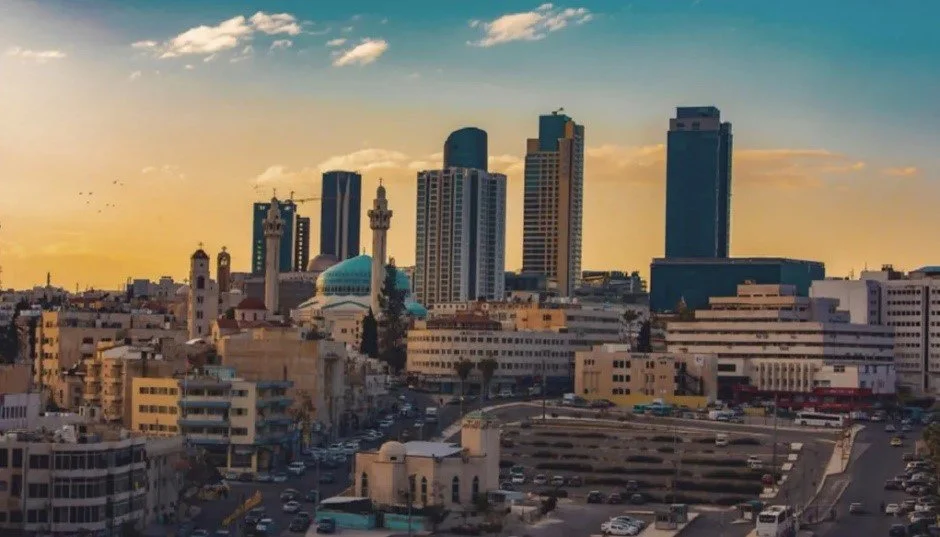
A picture of Amman. Photo credit: annahar.com
During the month of September, some positive indicators made it easily discernable that Jordan is continuing to grow its ecoonomy. For instance, the European Investment Bank met with the Minister of Planning and International Cooperation Zeina Toukan to discuss expanding their partnership on strategic projects. Talks included sectors such as water and wastewater, energy, education, financial services, and private sector support. The minister made sure to mention that the strategic projects will align with Jordan’s Economic Modernisation Vision. In return, the European Invest Bank, acknowledged that Jordan has greatly benefitted from the previous investments over the years and new projects would continue the momentum. Another indication is that the Amman Stock Exchange has achieved a remarkable milestone, with its general index crossing the 3,000-point barrier for the first time since 2008. This is a clear sign that the confidence of local, Arab, and foreign investors is growing in the Jordanian economy and the increasing attractiveness of the financial market amid improved macroeconomic indicators. According to Minister of State for Economic Affairs Muhannad Shehadeh, this increase in the general index coincides with a clear improvement in a number of other national economic indicators. The gross domestic product grew by 2.7%, exports rose by 9%, tourism revenues witnessed significant growth, and foreign reserves exceeded $23 billion. These indicators reflect Jordan’s economic and financial stability. He pointed out that this strong market performance was the result of a series of government measures aimed at stimulating trading and liquidity. Investors seeking citizenship were allowed to move their investments within the stock exchange, mutual funds were exempted from taxes, and brokerage commissions were reduced. He pointed out that recent amendments to relevant legislation and regulations have contributed to raising levels of transparency and increasing the market’s attractiveness to investors. They have also enhanced the confidence of market participants and provided trading with new and qualitative liquidity.
Iraq
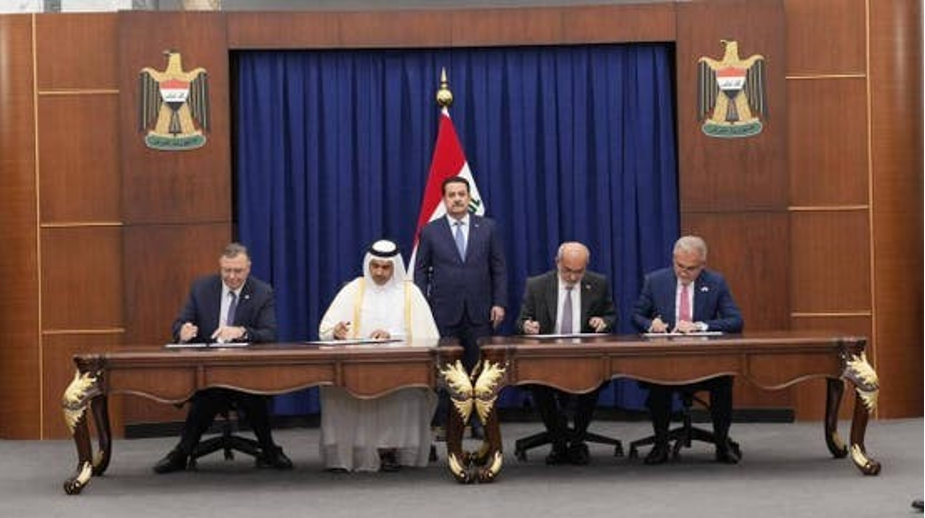
During this month, several multisectorial contracts have been signed throughout Iraa. Photo credit: alarabiya.net
The Iraqi government signed $1.32 billion in investment contracts with the International Finance Corporation (IFC), in a move described as a strategy to diversify the economy and boost international direct investment. According to Mazhar Mohammed Salih, the Prime Minister’s advisor for financial affairs, the signed contracts represent an important strategic step toward diversifying the Iraqi economy and boosting international direct investment. They also reflect the international community’s confidence in Iraq’s investment environment. Moreover, the International Finance Corporation, one of the World Bank’s arms concerned with financing and partnerships with the private sector, demonstrated through this conference its clear confidence in the Iraqi market, which constitutes a positive indicator for international investors. The minister explained that the new investments will contribute to creating job opportunities, improving infrastructure, and increasing local production, thus strengthening the country’s resources and moving away from its reliance on oil. According to conference data, the signed contracts included six other major investment projects, including a $250 million contract with Al-Muhaidib Group to expand cement and lubricants production. A $125 million contract was also signed with Lorraine Investment Company to finance container handling equipment and a storage yard at Umm Qasr Port. In the Kurdistan Region in northern Iraq, a $65 million contract was signed with Hiwa Rauf Investment Company to implement the first phase of the Green Residential Real Estate Development Project in Sulaymaniyah. A $10 million contract was also signed with the Bank of Baghdad to finance a credit line for international trade. The Prime Minister’s Advisor for Financial Affairs noted that the Corporation not only provides financing, but also combines it with management expertise and international standards, raising the level of projects in Iraq to global standards. He emphasized that this approach will enhance growth in the industrial, services, transportation, and communications sectors, and provide additional resources through taxes, customs duties, and utility operating revenues. In short, Iraq is succeeding in bridging various sectors together and creating a safe haven for foreign investments that can diversify the economy. Luckily enough, this momentum will continue and push Iraq to further decrease its dependency on oil.
Lebanon
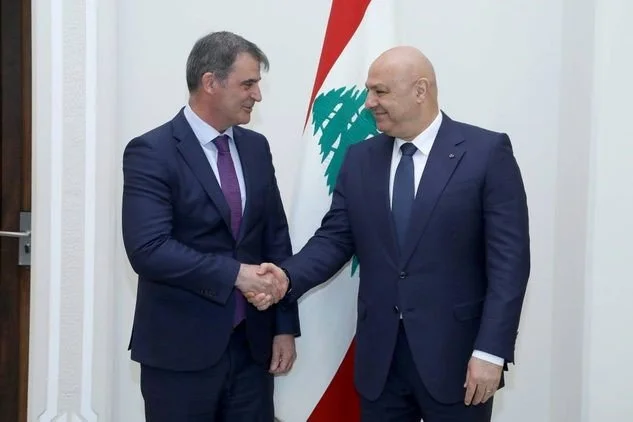
IMF’s Ernesto Ramirez Rigo met with Lebanese president Joseph Aoun. The IMF said Lebanon needs to do more to rebuild its economy. Photo Credit: IMAGO/APAimages via Reuters Connect
According to media sources, there is a plan being prepared to restructure the debt strangling Lebanon’s economy. However, some economists claim that the plan won’t help the country secure the IMF support. So far, the required reforms have yet to be implemented due to political and private interests. Key to the process is a law on the distribution of financial losses between the state, the central bank, commercial banks and depositors. However, Lebanese Minister of Economy Amer Bissat, who is participating in the negotiating committee with the International Monetary Fund (IMF), along with Finance Minister Yassine Jaber and Central Bank Governor Karim Saeid, stresses that the obstacles preventing and continuing to prevent an agreement with the IMF are more technical than political. He explains that the importance of the agreement with the Fund lies in helping the government, on one hand, to formulate all the necessary decisions and, on the other hand, to restore the confidence of the international and Arab communities. He acknowledges Lebanon lacks creditability, and that countries no longer believe in its leaders and their ability to bring about change and reform. However, an agreement with the International Monetary Fund may open the door and restore countries’ confidence in them. The technical obstacles preventing the signing of the agreement are thorny, according to Al-Bassat, and are linked to seven issues that are not impossible but require technical work, studies, and reports, all of which take time. He revealed that the number of rounds of negotiations with the International Monetary Fund (IMF) has reached five, with progress already made. The sixth round will take place when a delegation from the Fund is expected to visit Lebanon. He ruled out the possibility of the sixth round being decisive, given the outstanding issues, including the banking sector, structural sectors, financial and monetary affairs, and the electricity sector. Al-Bassat expects the annual meeting in Washington on October 13 to be an opportunity to complete the discussions and achieve progress. He asserts that the negotiating committee, which includes him, Jaber, and Saeed, will not make any decisions unless they serve Lebanon’s interests.
Palestine
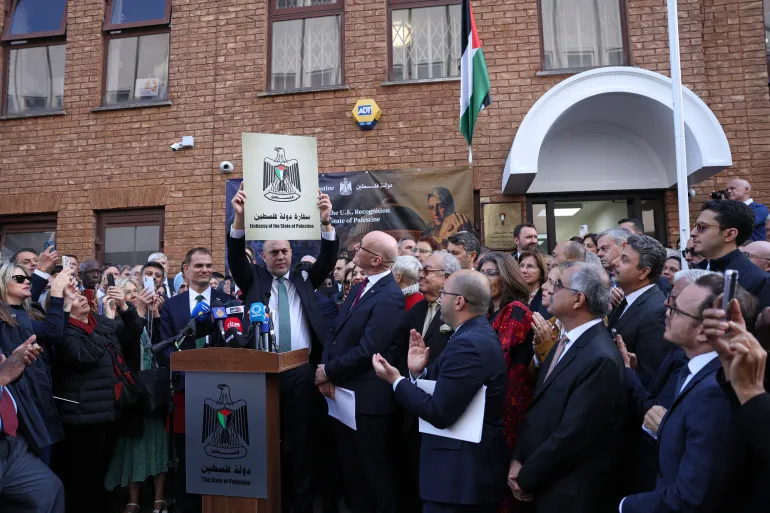
Head of the Palestine Mission to the UK, Husam Zomlot, reacts as he holds a plaque with the words ‘Embassy of the State of Palestine’, during a flag-raising ceremony outside the Mission in west London on September 22, 2025 (AFP)
During the month of September over 150 countries which include France, UK, Australia, and Canada have recognized Palestine as an independent state. This sent the Occupier’s leaders in a frenzy of press releases as they attempt to counter this move. Nevertheless, over 80% of General Assembly representatives have agreed on this making the move a major thorn in the Occupier’s plans. For a second, the whole world thought they have scored a major victory over this entity and just maybe, would push it to alter its actions. However, the Occupier has only become bolder ever since and has vowed to take measures to counter what has happened. As such, it has continued its crackdown on Gaza further expanding its invasion. Struggling hospitals, important landmarks such as the longest towers, and what remains of Gaza’s depleted infrastructures are all being targeted in a manner that suggests it is no longer a war between two armed groups but a mass extinction. With President Donald Trump mentioning that he is currently overseeing negotiations that would an end to the war and that the process is in its final stages, there is some hope that the conflict might finally come to an end. However, peace in the Middle East is quite tricky and the Occupier has a bad track record of destroying peace talks, especially when it all it cares about is domination and gaining territory at the expense of Palestinian sovereignty. For instance, earlier this month, Occupier approved a massive settlement plan that would split the West Bank in two. Moreover, the Occupier is still withholding 7 billion shekels (around $2 billion) in Palestinian customs money and is not releasing to choke the Palestinian economy. Also, it is still putting pressure on banks disallowing merchants to sell key resources like gasoline. This really puts the economy in a stranglehold as the banking sector is central in facilitating business transactions especially in those that include sizable amounts of money. Without it, this renders the Palestinian economy a severely broken one that would not be able to make any gains unless the Occupier allows it.
Syria
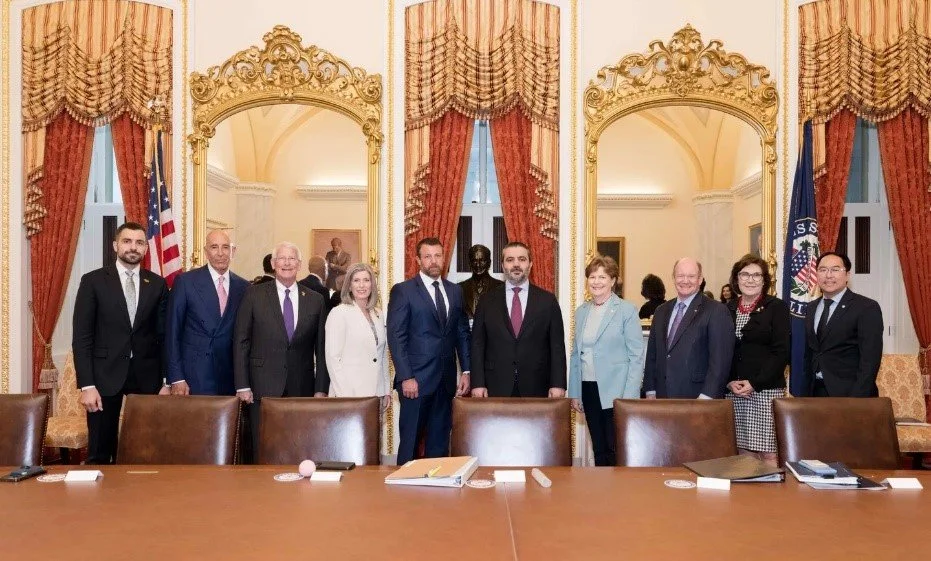
The meetings are historic in nature and mark Syria’s radical shift in doctrine and politics. Photo credit: https://www.trtarabi.com/
In a historic visit to the US, the Syrian Foreign Minister Asaad al-Sheibani convened with a number of US officials from the U.S. Treasury Department to discuss linking Syria’s economy to the global system, in the presence of U.S. Special Envoy to Syria Thomas Barrack. During the meeting, the two sides discussed mechanisms for responsibly and securely reconnecting the Syrian economy to the global financial system, which would contribute to strengthening bilateral cooperation in combating the financing of terrorism and developing the economic infrastructure to serve the interests of the Syrian people. This meeting comes as part of Minister Al-Shaibani’s visit to the United States, which includes a series of extensive discussions. It is important to note that these visits are the first visits by a Syrian foreign minister to the United States since 1999, reflecting a potential shift in relations between Damascus and Washington. It also comes within an accelerating diplomatic context aimed at repositioning Syria on the international stage following the fall of Bashar al-Assad’s regime in December 2024 and the political changes the country has witnessed. If Al-Shaibani’s negotiations with Congress succeed, lifting the sanctions will contribute to strengthening the Syrian economy and attracting investments, will strengthen Syrian-American relations. In the end, the meetings with prominent American figures reflect the seriousness of both sides in building a new relationship based on common interests. Also, Syria’s return to international forums, such as the UN General Assembly, will give an additional indication of the seriousness of this new path.
Another positive development within Syria is the declaration of the Directorate of the General Administration of Internal Trade and Consumer Protection in Syria announced the launch of a new package of services aimed at simplifying administrative procedures and facilitating services provided to investors and business owners. This step reflects the government’s drive to improve the business environment and promote local investment. The Directorate explained in a statement that the package includes a range of quality services, most notably those related to capital companies, issuing tax numbers, and publication in the country’s official gazette. It also includes the issuance of a non-conviction certificate, granting a financial clearance certificate, and commercial registry services in the Damascus Countryside Governorate, all of which contribute to accelerating and facilitating procedures related to establishing and registering companies. The directorate also indicated that work is currently underway to launch an electronic payment service for these services, in cooperation with relevant authorities, with the aim of accelerating the pace of work and reducing reliance on paper procedures, in line with the digital transformation in public administration. Also, the Syrian Ministry of Economy and Industry issued a decision to transfer the “Foreign Companies Branches and Agencies” Department from the Foreign Trade Directorate in the General Administration of Economy to the “Companies Directorate” in the General Administration of Domestic Trade and Consumer Protection in Damascus. According to the decision, this measure aims to regulate work and standardize the framework for monitoring foreign companies operating in Syria, enhance administrative efficiency, and ensure more effective oversight of these companies’ operations.
Read more: https://www.mecc.org/mecc/2025/10/2/the-invasion-of-gaza
By mecc