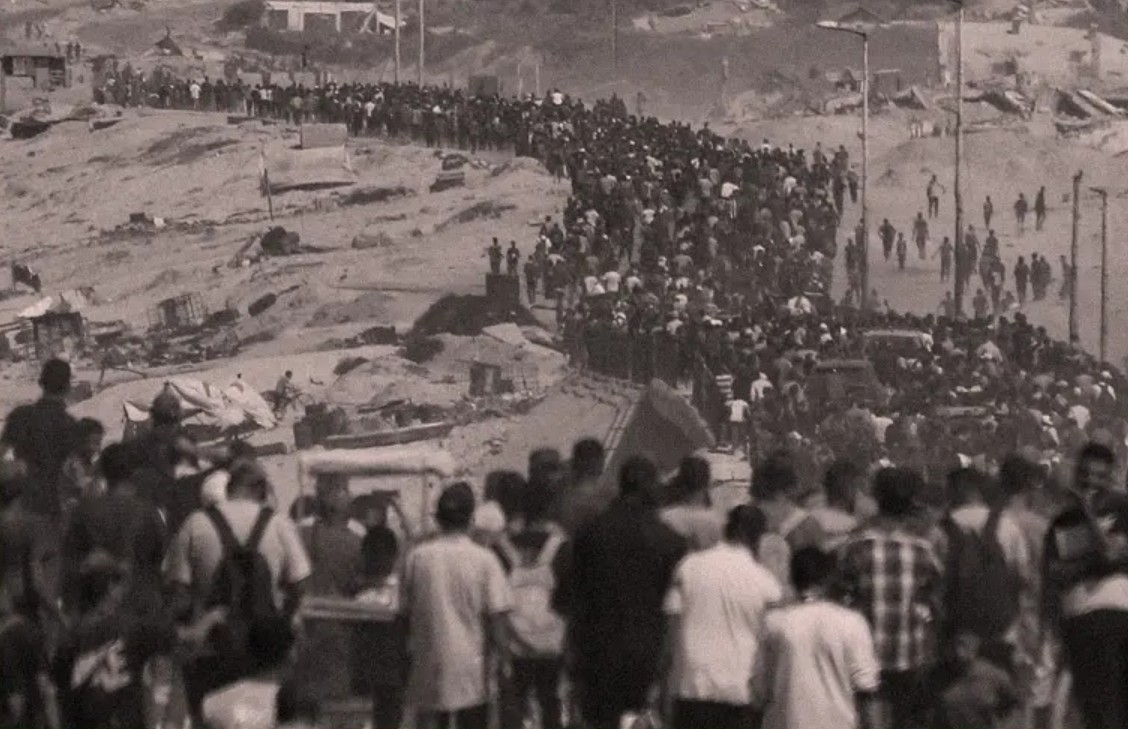
fter two years of bloodshed since Hamas attacked Israel on October 7, 2023, the war in Gaza seems to be over. The living hostages are back home, as President Donald Trump and Hamas and Israel hammered out in a cease-fire agreement. In that, all of us can rejoice, even if the peace will be fragile—and even though wounds from the loss of so many innocent lives, both Gazans and Israelis, will take decades if not centuries to heal. Christians around the world might be tempted to think this matter is now over, at least for us. Gaza, though, has more to do with our own gospel story than we might think.
It’s natural for people to pay more attention to a place when it’s somewhere they’ve lived. A missionary I know who worked in Africa for many years is especially attuned to news headlines about the continent in a way many others might miss. Even though I live in Nashville now, my ears perk up every time I hear any news from my hometown on the Mississippi Gulf Coast. For Christians, Israel and Gaza are places we have “been”—since, by union with Christ, we are part of his story and thus the story of his ancestors (1 Cor. 10:1–6).
Gaza is first referenced in the Bible as a border, the edge of Canaanite territory, the far southern boundary of what the Israelites would later call the land of promise (Gen. 10:19). Gaza comes up in the Book of Joshua, again as a kind of liminal space between the people and the world outside. It’s also the setting for the final scene of Samson’s story, in which the defeated and blinded man pulls down the pillars of a building. The account is unsettling in that it is a meeting place of deliverance and tragedy. Violence and redemption somehow cling to each other in the wreckage of a collapsing house.
By the time we get to the prophets, the word for Gaza seems, at first read, to be only judgment. Amos denounces Gaza for cruelty and injustice in selling an entire community into slavery (1:6–7). Zephaniah seems to be just as harsh, but that’s not the whole story. He also envisions a day when a place of violence is instead a place of pasture (2:4–7). Even in judgment, we see that tragedy is not the end of the story.
Reading such passages without the full context of Scripture could lead to distortion. We could start to identify present-day Gaza as the one-to-one equivalent of where the ancient Philistines lived. But that would be to ignore how judgment and mercy function in redemptive history. Judah, too, is judged—the northern kingdom as well. All of us in Christ are those who were once “far off” and have been “brought near” (Eph. 2:13, ESV throughout). In fact, the one explicit mention of Gaza in the New Testament makes this clear.
In the Book of Acts, Luke writes that God directs the disciple Philip to take the road that goes south from Jerusalem to Gaza. There he meets an official of the Ethiopian royal court, reading the Book of Isaiah (Acts 8:26–39). There on the road, the gospel crosses one of its first borders. The Gentiles are enfolded into the people of God. The once-hostile frontier becomes a pathway of grace. What was thought of as the edge of the map becomes the entry point to the kingdom.
Read more: https://www.christianitytoday.com/2025/10/gaza-hostage-cease-fire-russell-moore/
By Russell Moore | christianitytoday