In the Gaza Strip, the fragile calm following the Oct. 13 Israel-Hamas peace deal has brought little relief to the enclave’s small Christian community.
While portions of aid were delivered after the Oct. 13 visit by President Donald Trump to Israel and Egypt — a day marking the signing of the Israel-Hamas peace deal — the situation remains precarious in the enclave.
“A significant number of civilians have been killed since the ceasefire began, each death justified by flimsy excuses,” Joseph Hazboun, regional director for Catholic Near East Welfare Association-Pontifical Mission’s Jerusalem office, said in an Oct. 28 update sent to the press.
Aid is ‘being strangled’
“Similarly, the promised aid is being strangled: Food trucks are limited, reduced and never allowed to reach the agreed-upon numbers. Again, the justifications offered make no sense,” he said.
Hazboun emphasized that the Christian community’s presence in the Gaza Strip is threatened with the fragility of the situation in the enclave.
“The most immediate threat is famine, as humanitarian aid such as food, has only just begun to trickle into the Gaza Strip,” Hazboun said. “With their neighborhoods mostly destroyed, the Christian families in Gaza who remain are displaced and homeless, relying nearly entirely on the Holy Family Church and the Greek Orthodox Church of St. Porphyrius for refuge. This dependence is stretching the churches’ limited resources and fragile security to a breaking point,” he added.
Collapsed health care system
“Adding to their vulnerability, the collapsed health care system leaves the community vulnerable to injury and illness,” creating “an environment of uncertainty and mass emigration, threatening the community’s ancient presence in the Holy Land.”
According to local sources, Hazboun said only 596 people, or 207 Christian families remain in Gaza, with 214 people, or 71 families, sheltering at St. Porphyrius and 382 people — 136 families — sheltering at the Holy Family Church.
To help them, CNEWA’s Jerusalem office, with partners on the ground, “has initiated a comprehensive survey to gather critical data: the current numbers of people, the status of their homes, their locations, and their most immediate needs. This data is the cornerstone of effective planning for urgent interventions,” Hazboun said.
‘We will stand by their side’
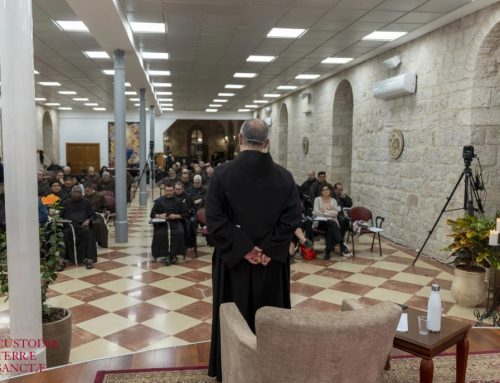
Gestures of solidarity are crucial, he said, as “a signal to the people that we are with them, we are thinking of them, and we will stand by their side through the profoundly challenging phase to come.”
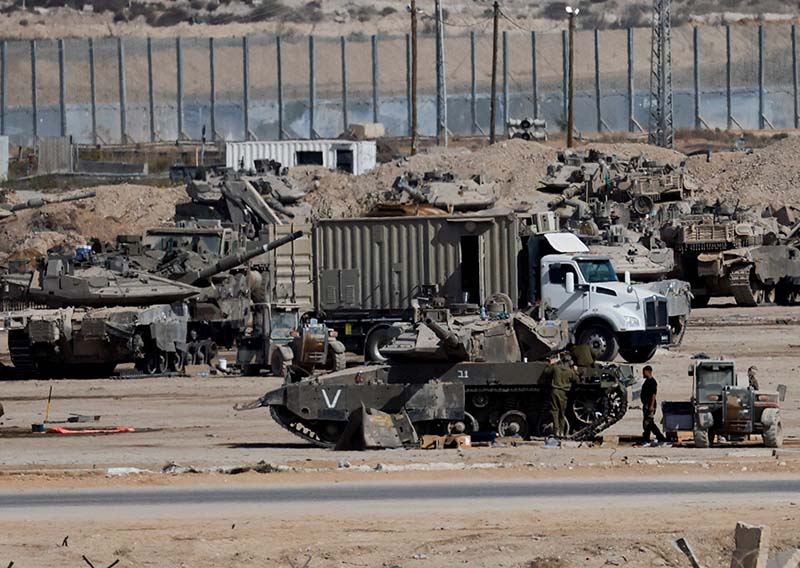
Hazboun, who has coordinated CNEWA’s humanitarian efforts since the start of the war, said the Gaza Strip has been cleaved in two, with Rafah, the eastern reaches of Khan Yunis and Gaza City, and all of Beit Hanun and Beit Lahia under full Israeli control.
“Palestinians can move freely and attempt to return to their homes” only in 50% of the strip. “The rest … is strictly forbidden.”
The October ceasefire has resulted in a critical but fragile humanitarian situation, Hazboun said in his update.
A different struggle
“Now, a different struggle begins for the Gazans returning to their demolished homes. Israel has made life impossible in an effort to push them out, yet for two years, the people have held fast,” he said.
“They remain, but amidst near-total destruction: no infrastructure, no schools, no water, no homes, no electricity, no hospitals, no hygiene.”
While the total number of deceased hostages stood at 15 as of Oct. 21 — the bodies of 13 Israeli hostages remain in the Gaza Strip. The Gaza Ministry of Health reported the total number of bodies of deceased Palestinian detainees returned since the start of the ceasefire came to 165, with some media reports noting the total returned by Israel to Gaza has reached 195.
Between the start of the ceasefire and Oct. 21, CNEWA said 533,000 people were displaced.
Operational restrictions
While the delivery of humanitarian aid “is picking up speed,” it “remains limited by operational rules and restrictions,” Hazboun said.
Between Oct. 11 and 22, 1,098 trucks offloaded supplies, with “essential cargo being distributed” that included “food, tents, blankets, hygiene kits, and medical supplies.”
But aid groups are facing obstacles, CNEWA’s regional director said, pointing out that the Israelis “rejected several aid submissions … stating organizations were unauthorized to bring in specific items.”
Hazboun said, “The effort to deliver food aid is quickly ramping up, with the U.N.’s Food Security Sector now providing over 1 million hot meals every day across the Gaza Strip” with the supply of bread also significantly improving. “Nine U.N.-supported bakeries are making over 100,000 bread bundles daily in the central and south, and six more have reopened in the north after getting fuel and flour.”
Severe malnutrition has eased
“In a positive sign,” Hazboun said, “efforts to improve nutrition are succeeding; the rate of severe malnutrition found in children has fallen from 14% to 10%. Since the ceasefire, the total number of clinics, community centers or mobile distribution points that provide targeted support to the people most at risk of malnutrition has grown to over 150 throughout Gaza.”
However, urgent needs remain.
Read more: https://www.osvnews.com/with-gaza-strip-situation-fragile-christians-ancient-presence-in-holy-land-threatened/
By OSV News