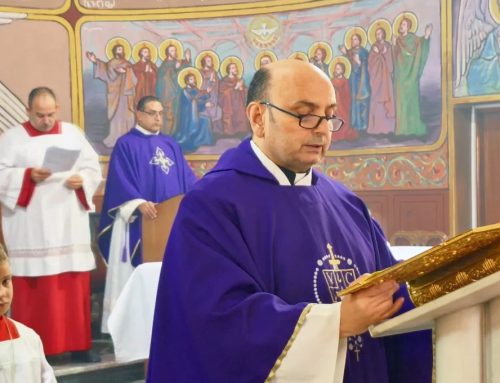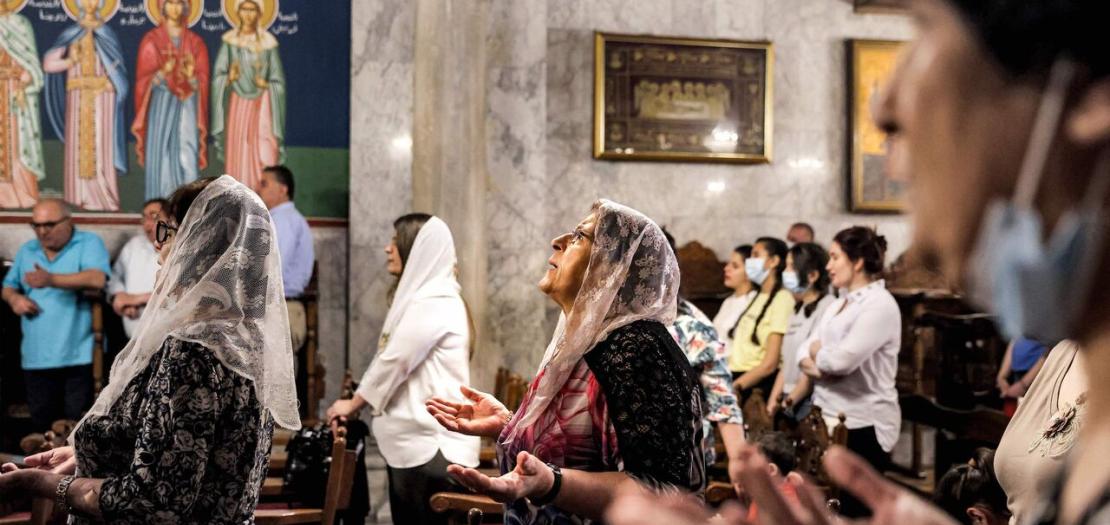
In the heart of a war-torn Gaza City, where the sounds of bombs have become background noise and the cost of an onion can exceed 15 euros, a small Christian community clings not only to survival but to faith. They are just under 500 now — down from over a thousand before the conflict reignited last October 7, 2023— and a portion of them they live, breathe, and a pray within the walls of the Holy Family parish, the only Catholic church in the Gaza Strip.
For most of the world’s 1.3 billion Christians, the idea of paying 250 euros for a kilogram of coffee seems absurd. But for Father Gabriel Romanelli, the Argentinian priest who never left his people, the figure is almost irrelevant. “That price is theoretical,” he says. “Before we talk about what something costs, we have to find it. And that is nearly impossible.” The sugar, when it can be found, is worth its weight in silver — a kilo can cost up to 100 euros. But the real currency here is silence between explosions and hope whispered in prayer.
Since the suspension of humanitarian aid in early March, even theoretical access has all but vanished. Families now rely on whatever remnants they stored during brief ceasefires, and even those are running out. Rations are carefully divided, and impromptu gardens — a symbol of both desperation and resilience — sprout in bomb-cratered courtyards. But fewer people are left to tend them, as most have fled south or died.
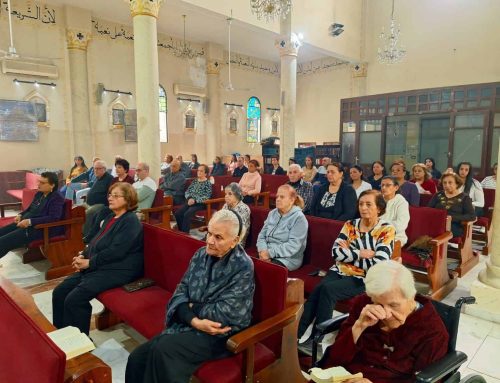
“The church is full, but not for Mass in the usual sense,” Father Romanelli explains. “Every corner has become a refuge. Our pews are beds. Our sacristy is a pantry. The courtyard shelters children and the elderly. We’re living on the grounds of the sacred because it’s all that remains.”
The numbers paint a picture both stark and sacred. Before the conflict escalated, over a thousand Christians — mostly Orthodox and Catholic — called Gaza home. Around 300 managed to cross into Egypt while the Rafah border was still open. Fifty-four have died since. Sixteen were killed in a single airstrike on the Orthodox Church of St. Porphyrius. Others died not from explosions but from the invisible toll of untreated illnesses — diabetes, heart conditions, infections that no longer meet medicine. There are about fifty disabled and critically ill people now under the care of the Missionaries of Charity, the nuns of Mother Teresa, whose presence has become a form of resistance.
And yet, what shocks isn’t just the loss of life or the scarcity of food. It is the raw endurance of spirit.
We are exhausted,» Romanelli admits. “But we are not broken. We are not abandoned. The world may not see us, but we know that it prays for us.”
Read more: https://en.abouna.org/content/how-many-christians-remain-gaza-after-nearly-two-years-war
By zenit.org