United Nations Security Council Resolution 2803, which led to a precarious ceasefire in the Gaza Strip, contains positive aspects, but these are also accompanied by weaknesses. The new phase initiated by the Resolution has led to a decrease, but not an end, of the violence. In some respects, it “smacks of colonialism,” demonstrates a “lack of global vision,” fails to consider current developments in the West Bank, and does not even attempt to challenge the ethnocentrism and discriminatory factors that structurally sabotage the path to peaceful coexistence among the various population groups in the Holy Land.
This mixed assessment is contained in a statement published in recent days by the ecumenical think tank “A Jerusalem Voice for Justice” regarding the latest UN Resolution on Palestine, based upon a draft of the United States administration. The resolution was accepted by thirteen of the Security Council member states while two (Russia and China) abstained.
The resolution aims to establish a “Board of Peace” headed by President Trump, that would oversee an International Stabilization Force.
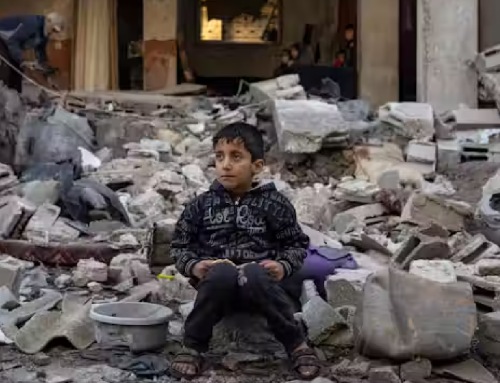
“Less genocide, less domicide, less displacement, and less dismantling of the few Palestinian institutions” are among the positive effects of the resolution, according to the Christian signatories of the statement. At the same time, they noted that hundreds of Gaza residents have been killed and injured since the “ceasefire” came into effect.
The UN Resolution—the signatories of the document add—subordinates self-determination to the “reforms” demanded of the Palestinians. But one must ask whether these reforms truly aim to end corruption and mismanagement, or whether they instead seek to impose conditions set by Israel and the United States on Palestinian self-determination.
Among the Resolution’s “negative aspects,” the document published by “A Jerusalem Voice for Justice and Peace” highlights its colonialist features and cites “the administration of the Gaza Strip by foreigners under the leadership of the President of the United States.” Furthermore, “the most negative aspect of the resolution is its lack of a global vision.” The resolution “ignores the realities in the West Bank (including East Jerusalem)” as well as “the violent dismantling of Palestinian refugee camps and villages, the extreme violence of the Israeli army and police, and especially Jewish settler vigilantes.”
According to the document’s authors, “there is no way forward unless we are willing to rethink the global situation in Palestine/Israel. Since the British Balfour Declaration (1917),” the text states, “the discourse has been based upon a division into Jew and non-Jew, establishing the inequality that has emerged since then.” The document also states that “the 1947 UN partition plan was in direct continuity with British colonial rule.”
Read more: https://www.fides.org/en/news/77072-ASIA_HOLY_LAND_Ecumenical_reflection_group_Positive_aspects_and_weaknesses_of_the_UN_Resolution_on_the_future_of_Gaza
By Agenzia Fides