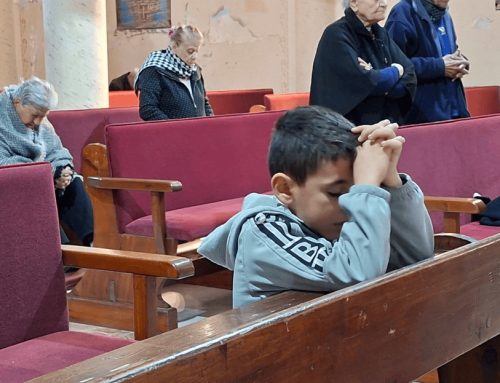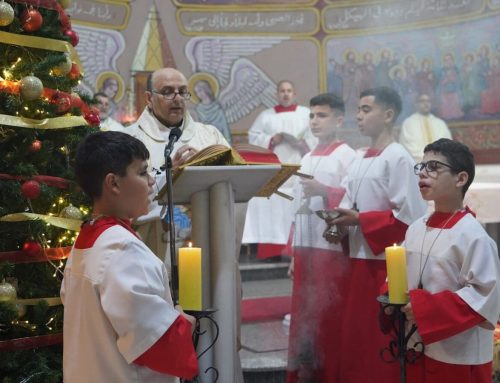
After two bleak Christmas seasons, Bethlehem, the birthplace of Jesus Christ, is preparing to celebrate once again.
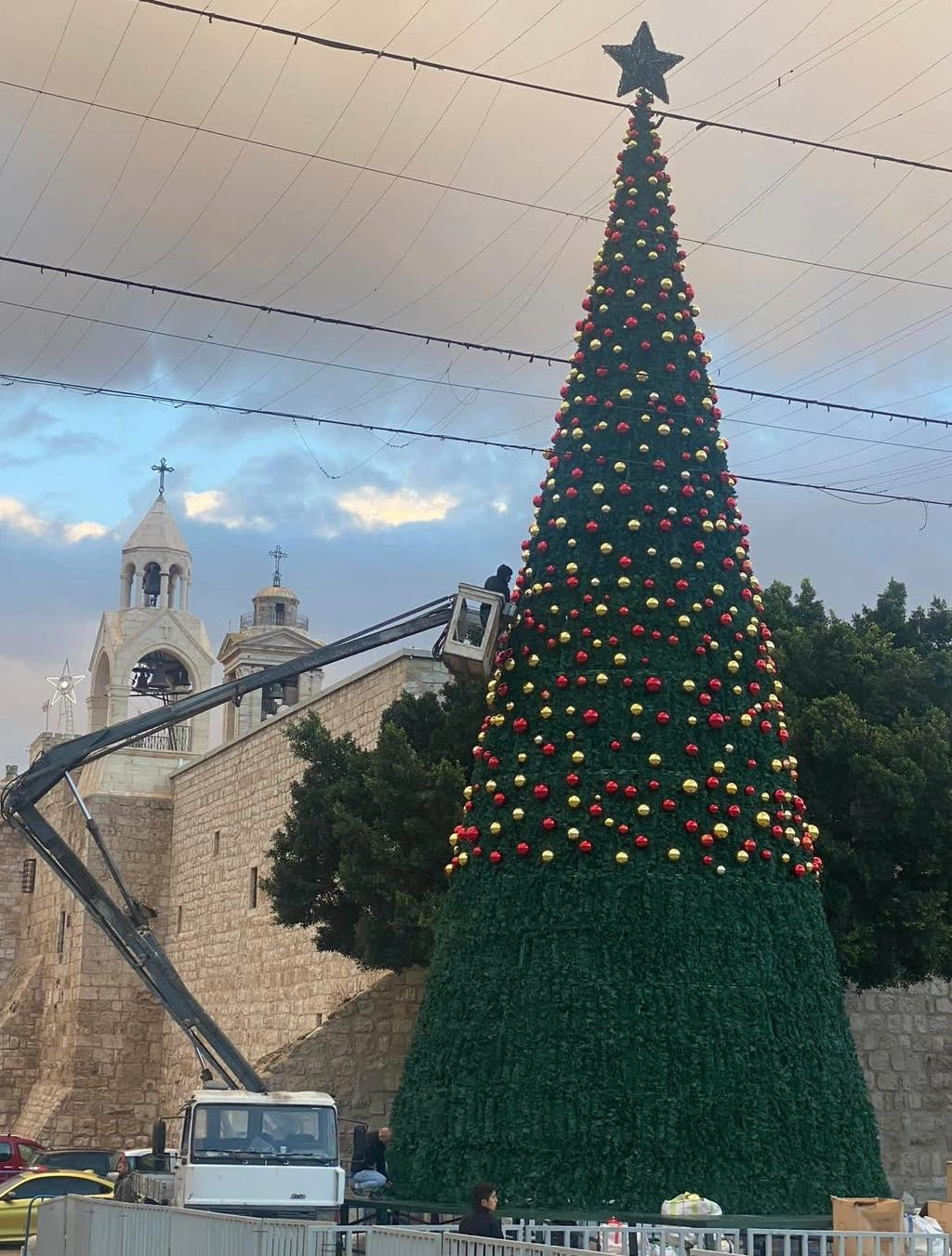
The Palestinian city of Bethlehem, a symbol of hope for Christians worldwide, will light its Christmas tree in Manger Square on Saturday (December 6), announcing not only the start of the holiday season but also the resilience of a people determined to reclaim joy after years of sorrow.
The ceasefire in Gaza, brokered by the United States, has not stopped the Israeli attacks on Palestinians, nor has it alleviated the suffering in Gaza or the West Bank. Yet, Bethlehem has chosen to celebrate. Following ancient protocols observed by the religious denominations in the Holy Land, the city will host three Christmas celebrations: December 25 for churches following the Western calendar, January 7 for those following the Eastern calendar, and January 18 for Armenian Christians. Scouts will march, choirs will sing, and midnight masses will once again fill the Church of the Nativity. Bethlehem’s decision has encouraged other Palestinian cities to join. From Beit Jala and Ramallah to Nablus and Zababdeh, and from Amman to Al-Husn, Al-Karak, and Madaba, all have decided to decorate streets and churches in a collective, popular effort aimed at encouraging hope and restoring community bonds.
Nevertheless, despite the lights and hymns, the reality on the ground remains grim. Unemployment in Bethlehem has risen to 31%. Tourism—typically the city’s economic lifeline—is costing the city around $2.5 million daily. In 2022, Bethlehem welcomed 1.5 million visitors; today, this sector faces the risk of collapse. Hotels and workshops are operating at a fraction of their capacity. Families who previously depended on pilgrimage income fear bankruptcy.
If economic distress were the only suffering, the situation would be catastrophic enough. But the past two years have also seen a worrying escalation in Israeli settlement expansion and settler violence.
South of Bethlehem lies Beit Sahour, home to the Shepherds’ Field, where the Gospel of Luke mentions angels appearing to shepherds to announce the birth of the Christ child. There, the danger is becoming more urgent. The town’s mayor, Elias al-Sa’id, has sent an urgent message to world and church leaders, warning of an Israeli plan to build a new settlement on the town’s lands, describing it as a “land grab” that would “terrorize” a mostly peaceful Christian community.
The targeted area is part of “Area C,” under full Israeli control. It includes the Ush Ghrab park and recreational areas, already surrounded by a military outpost. Al-Sa’id warns that establishing a settlement there “will disrupt our entire community” and push residents toward forced displacement. He cites figures from the UN Office for the Coordination of Humanitarian Affairs documenting 757 settler attacks since January, a 13% increase from last year.
In this context, Bethlehem’s Christmas tree has become more than just a decoration; it is a declaration of life, resistance, and national identity. As children gaze at its lights and choirs sing in many languages, Bethlehem insists on its right to celebrate and to exist, even while surrounded by walls, checkpoints, and expanding settlements.
Christmas in Palestine is not an escape from reality; it is a challenge. A declaration that joy will not be extinguished, that faith survives occupation, and that hope is not just for the powerful, but for the persevering as well.
As the tree is lit and hymns echo in Manger Square, Bethlehem sends a message to the world: peace requires justice. The call of the angels two thousand years ago, directed to shepherds from the neighboring fields of Beit Sahour, still resonates today: “Glory to God in the highest, and on earth peace.”
The question now is: Will the world listen?
Source link: https://milhilard.org/z40m
By Daoud Kuttab | milhilard.org