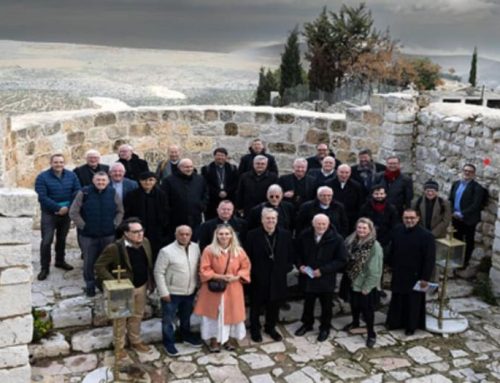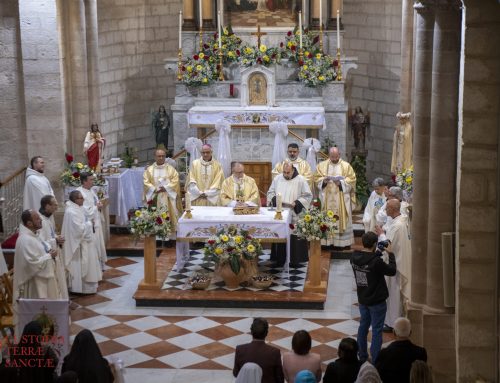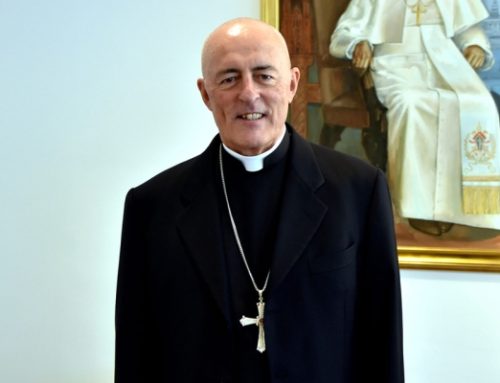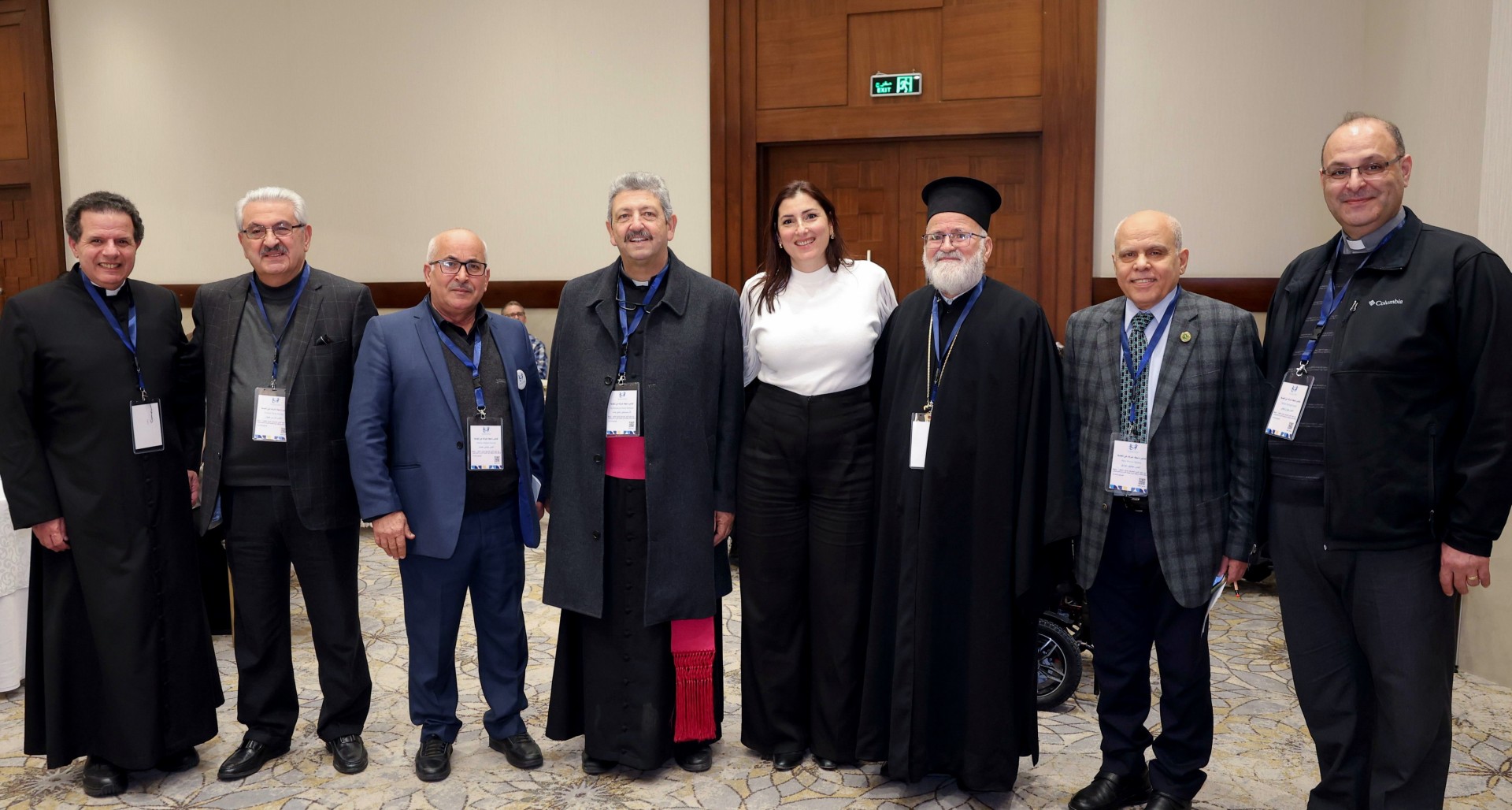
The Inclusive Churches Conference, “Partners in Service,” which commenced in Amman on Saturday, provided a platform for dialogue between people with disabilities and their families, alongside several Christian clergy, aiming to break down stereotypes associated with people with disabilities.
Ghadeer Hamarneh, founder and director of the “Inclusive Jordan” Foundation, analyzed the reality of people with disabilities, emphasizing the need to strengthen their presence within inclusive churches that cater to their needs during their prayers.
She stated that the inclusive churches project is in accordance with God’s heart, message, and origin, quoting the conference’s verse: “Therefore, strengthen your feeble arms and weak knees.” This verse acts as an exhortation to believers to renew their spiritual strength, persevere through divine discipline, and overcome exhaustion or despair in their faith journey.
Hamarneh expressed her hope that the conference would be held annually to create a space for churches to share their experiences regarding inclusion, and that it would be led by the Inclusive Churches Network, which would be formed after the first conference.
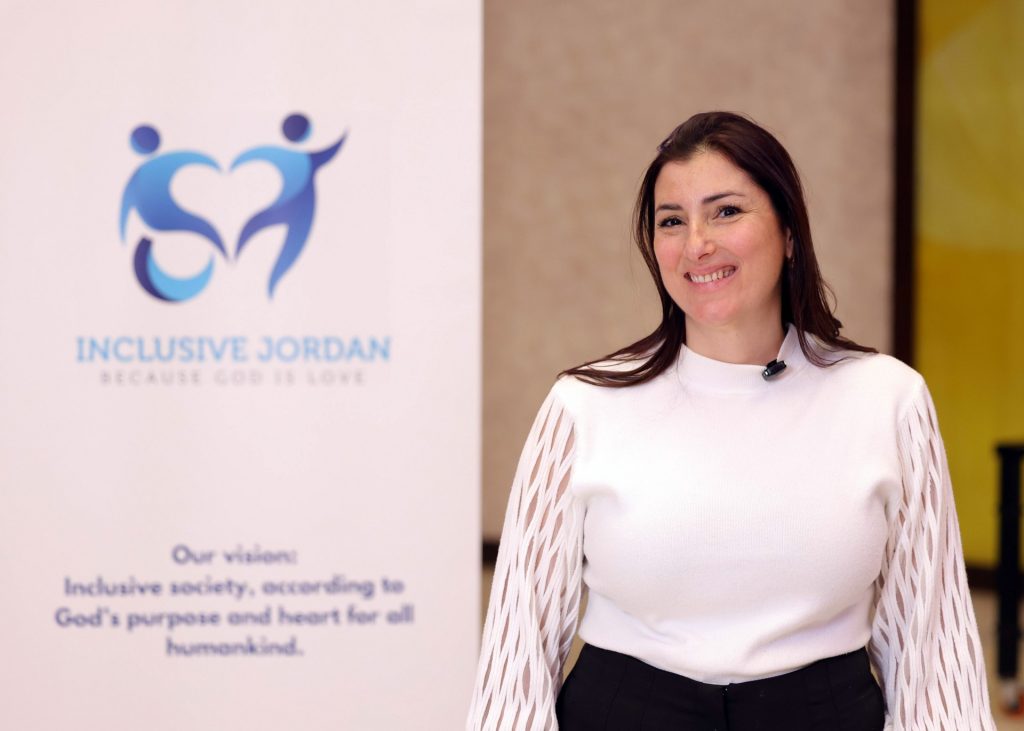
According to Hamarneh, the goal of the first conference is to select 10 to 15 churches to work with through the “Inclusive Jordan” initiative. She told Milhilard.org, “The goal of the event is to break down stereotypes about people with disabilities, build bridges of communication between the Inclusive Churches Network, provide a space to share success stories and challenges, and find possible solutions.”
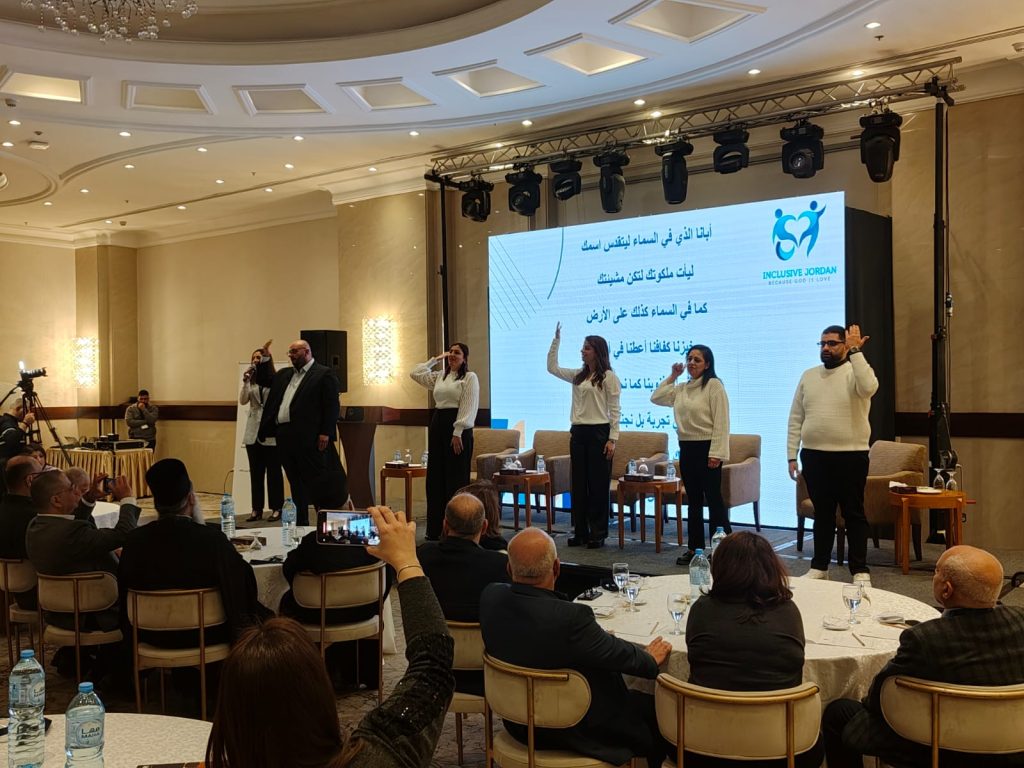
She continued, “The specific goal of this conference is to launch the Sign Language Voice Team and select 10 to 15 churches within the Inclusive Churches Network to begin implementing the project.”
“A tongue that neither speaks nor remains silent… but the deaf person translates the words of the Lord and prayer.” In sign language, Rasha Habash says that God loves the deaf just as He loves sign language, which has made prayer easier. Rasha Habash, who is hearing impaired, adds, “I love the church… and I love to learn. I always wished someone could speak sign language to teach me. I learned hymns and prayers in my childhood from picture books.”
She added, “Today, things have changed. I pray and read in sign language with the help of people who assisted me. I truly wish we had an inclusive church that meets the needs of people with different disabilities.”
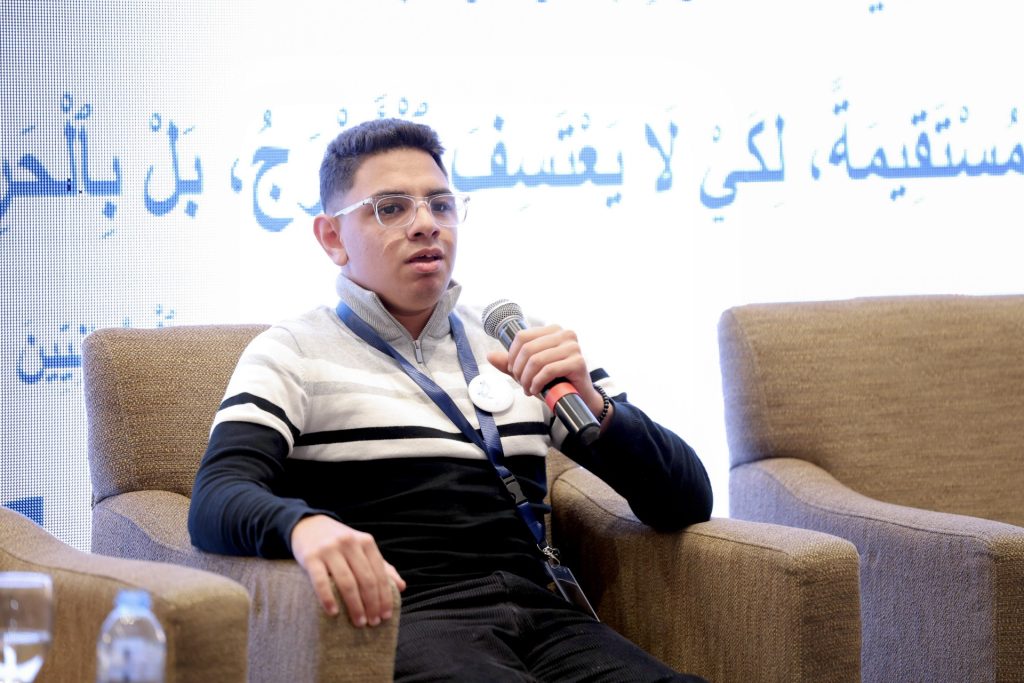
One participant introduced himself to milhilard.org: “I am Adam, 16- years old student at the Alliance Academy Jordan (AAJ) said: “I was diagnosed with cerebral hypoxia in childhood… I am a normal human being, created in a way that pleases God, and God loves me. I was created as I am… I am created in the best of forms… and the church is my place of rest.”
The conference also included a discussion on the etiquette of interacting with people with disabilities (presented by people with disabilities themselves). The aim was to clarify appropriate communication methods with people with disabilities, what should and should not be said, and how to understand what might unintentionally offend. Simple guidelines were also provided for interacting with each type of disability with respect and awareness.
Linda Zaki – Milhilard.org