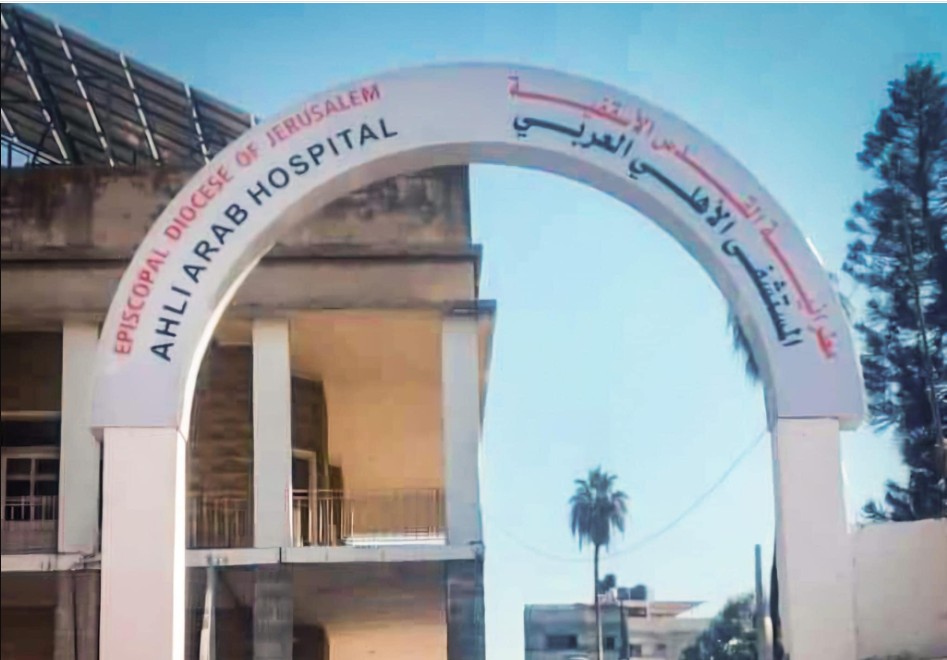
In a recent conversation with the American Friends of the Episcopal Diocese of Jerusalem (AFEDJ), Dr. Suhaila Tarazi, General Director of Ahli Hospital, shared the hospital’s extraordinary efforts, the challenging realities they face today, and how your partnership with AFEDJ keeps the hospital standing as a crucial refuge for the people of Gaza.
Still standing, against the odds
As many health facilities across Gaza have been damaged or forced to close, Ahli remains one of the few fully operational hospitals left to serve the entire population. This reality has reshaped every aspect of daily life inside the hospital, placing unimaginable pressure on both staff and infrastructure at a time when resources are already incredibly lean.
For decades, Ahli has provided essential medical services to its community, but the violence and instability of the current crisis have forced it to transform, functioning primarily as a trauma and emergency hospital. Thanks to support from AFEDJ donors like you, the hospital has been able to pivot swiftly and meet this crisis head-on. Now, Ahli works to balance these roles, maintaining a strong emergency response while also planning for the long-term health of the community.
This balancing act is reflected in their daily operations. “Our emergency department is open 24 hours a day,” Dr. Tarazi shared. “We must be prepared for whatever comes next, while also providing essential services that people depend on every day.” It’s because of you that families in Gaza have this safe place to turn when no other help is within reach.
Steady, essential care
This commitment to a dual mission is written into the hospital’s rhythm, as Ahli works to restore everyday medical services that families rely on. Outpatient clinics now see up to 300 patients daily for routine care, operating in tandem with an emergency department that handles 1,200 cases each month. The hospital also performs 300 surgical operations monthly, treats 150 burn cases daily, and provides physical therapy to approximately 100 patients every day, pushing limits as need continues to outpace capacity. Each one of those patients reflects the difference you are making, one life at a time.
Nearly 99 percent of Gaza’s population now lives in poverty, many displaced with no source of income. Most cannot afford medical care, but your belief in healthcare as a human right enables Ahli to continue offering services without cost, ensuring that financial hardship does not determine who receives treatment and who goes without.
Women’s health care crisis
As is often the case with vulnerable populations, the women and girls of Gaza carry a disproportionate share of the burden. Displacement, trauma, and poverty affect nearly every household, leaving women’s health needs severely neglected. Many have gone years without basic obstetrics, maternal health care, prenatal check-ups, or breast cancer screenings, allowing treatable conditions to worsen over time. Dr. Tarazi and her team are working to reverse this trajectory, calling on your compassion to revive these essential services at Ahli and restore the dignity of appropriate care to women across the region.
By afedj.org