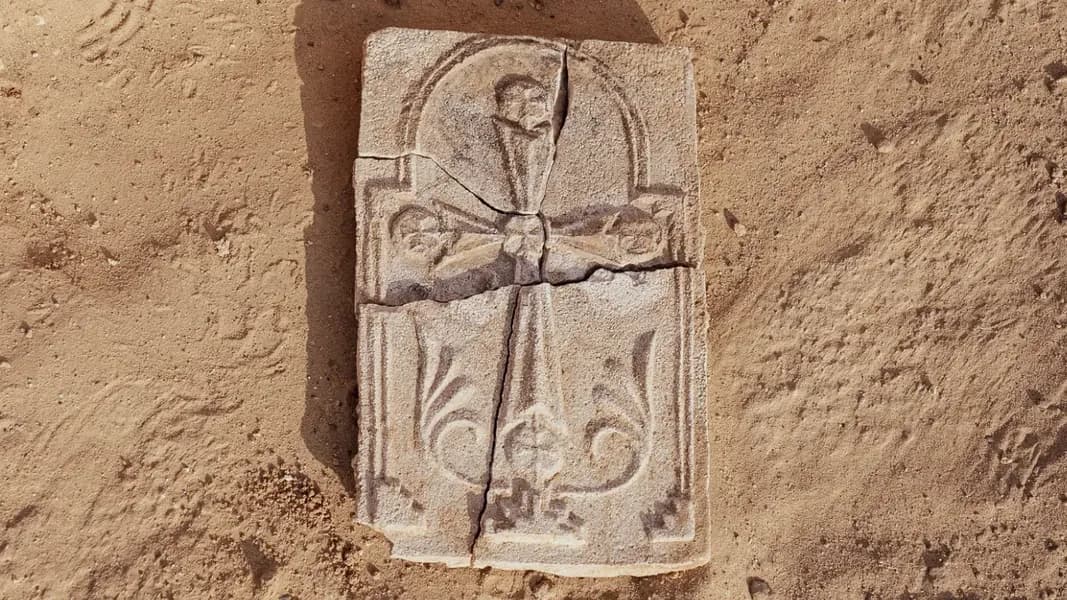
Archaeologists working on a small island in the Persian Gulf have discovered an artifact attesting a Christian monastic presence on the island some 1400 years ago.
The site is located on Sir Bani Yas, an island some 110 miles southwest of Abu Dhabi, the capital of the United Arab Emirates, and has been known to archaeologists since 1992.
The evidence discovered is a plaster cross molded onto a plaque about 10.6 inches long, 6.7 inches wide, and a little less than an inch thick. The artifact is decorated with symbols suggesting the community that lived there belonged to the Church of the East (which began to split when the Church refused the condemnation of Nestorian heresy at the Council of Ephesus in 431 and did not recognize the Council of Chalcedon in 451).
It was found at a site believed to date to seventh and eighth century, first excavated in the early 1990s. The site contains buildings archaeologists have identified as a church and monastic living quarters.
At the time the monastery flourished, it was part of a network stretching across the area of modern-day Gulf states, including Kuwait, Iran, and Saudi Arabia.
Maria Magdalena Gajewska, an archaeologist working with the Abu Dhabi Department of Culture and Tourism, said the artifact was discovered as part of the first major excavations since the site was first identified, and are the first ever of the monastery’s living quarters.
“The site, the monastery, also included the first houses – there are about nine of them, to the north and northwest of the main church,” Grajewska said in a video produced by the Abu Dhabi Media Office to publicize the find.
Read more: https://cruxnow.com/church-in-the-middle-east/2025/08/archaeological-find-confirms-7th-century-christian-presence-on-uae-island
By Crux Staff