With unemployment disproportionately affecting the Christian community, and as a gesture during the Jubilee of Hope, the Latin Patriarchate of Jerusalem (LPJ) decided to cancel student debt in all its schools.
Even though Christians are the smallest of the three major faith groups present in the Holy Land, after Jews and Muslims, the Catholic Church runs the largest network of schools in the region.
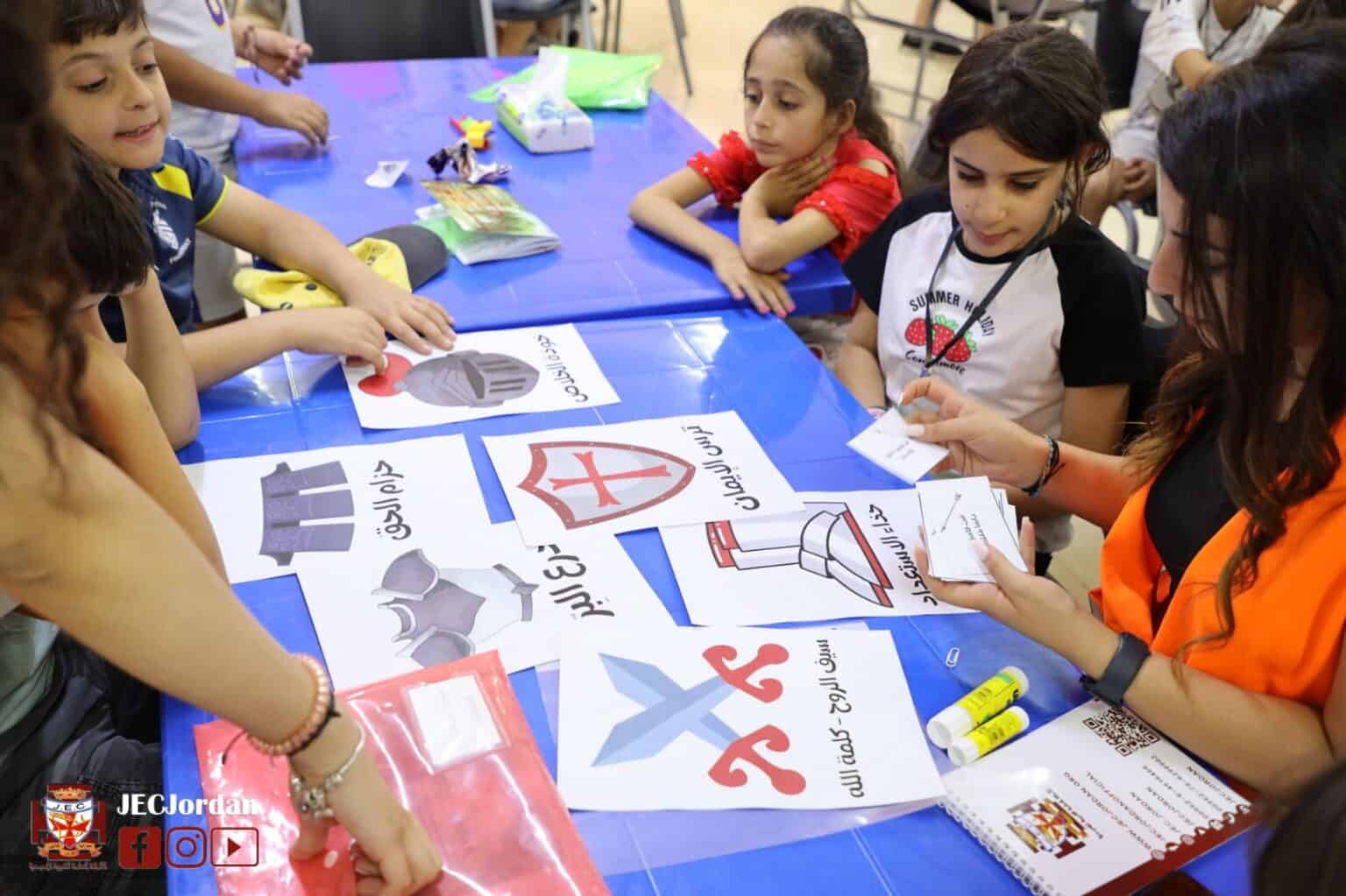
More crucially, though, Catholic schools are unique in the composition of their student bodies and in their stated mission. “We have over 20,000 students, and in all of our schools, there is a concrete opportunity for people of different faiths to meet, to respect one another, to learn together, and to build relationships that last a lifetime,” says Fr. Davide Meli, chancellor of the Latin Patriarch of Jerusalem, speaking to Aid to the Church in Need (ACN).
The percentage of Chistian students differs, depending on the region. In Israel, 83 percent of students are Christians; in Jordan, it is 57 percent; and in Palestine, it is only 35 percent. “Catholic education is about giving concrete values and creating relationships. It’s not so much a social thing as an anthropological thing. Jesus Christ is the teacher, par excellence. In our context, the school is a place where people who are from different religions, from different societies, learn how to live according to the Gospel values. And
they learn how to relate with themselves and with others, according to those values,” adds the priest, who has lived and worked in the Holy Land for many years.
George Akroush, Director of the LPJ Development Office, says that the schools are also an important asset for keeping Christians in their homelands. If parents are not able to ensure a quality Christian education for their children, they will most likely leave, as so many have done in recent decades, to seek a better life in the West. This is why the Latin Patriarch, Cardinal Pierbattista Pizzaballa, often says that “to close a school is to close a parish,” and to forfeit the future of a living Church in the land of Jesus.
When asked, however, young Christians in the Holy Land say that they want to stay. “We are deeply committed to preserving a vivid and strong Christian community in the Holy Land. I conducted research that proves that 93 percent of our younger generations are still proud to be part of the Holy Land. They feel it is a kind of vocation, that it is God’s plan, that He wanted us to be in His homeland, the land of incarnation and salvation,” says Akroush.
But all this presents the Patriarchate with a conundrum, because in a very difficult economic climate, caused by a succession of events such as the pandemic and then a long war in Gaza, Christians have been the hardest hit, proportionately, “which means that the higher the number of Christian students in a Christian school, the higher the deficit,” Akroush says.
Faced with this, Patriarch Pizzaballa decided it was necessary to take action. Between closing schools and dismissing families with debts, he chose a third way: an option of hope. “The Patriarch said that since this year is the year of the Jubilee of Hope, and that part of the practice during the jubilee is to forgive debts, he had decided to forgive all accrued school debts, except for the ones for this current school year. He basically crossed out millions in debt with the stroke of a pen, which, from a purely financial point of view, ruffled some feathers, but it was the right thing to do,” Fr. Davide Meli explains.
“Many of our families were very worried about this, and when he forgave those debts, they saw it as a sign of dignity, that the Church is with them, that it cares,” the Chancellor adds.
Read more: https://www.churchinneed.org/acn-helps-keep-the-doors-of-christian-education-in-the-holy-land-open/
By Filipe d’Avillez | churchinneed