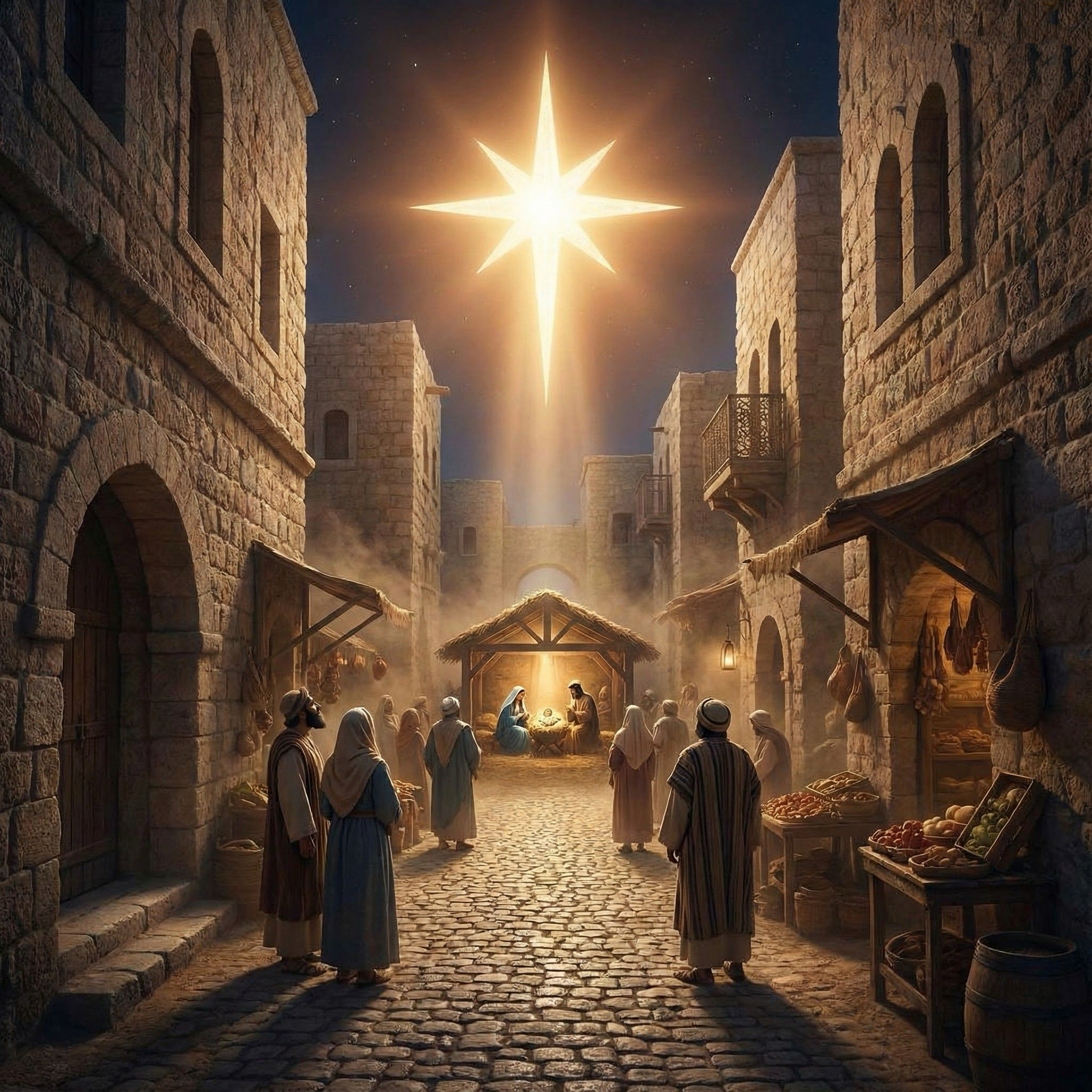
Before Christmas became a global season of tree lighting, decorations, Christmas markets, gift-wrapping tutorials, and holiday movies marathon, it was a single night in a humble manger in a small town. The simplicity of the place was grand enough for earth to meet heaven and change the course of human history forever. The star that guided shepherds and kings more than two thousand years ago shines again to illuminate the birth of Christ, not once but three times during the longest Christmas season in the world, spanning three calendars.
Here, in the cradle of Christ, Christmas is not merely a holiday; it is a living, breathing legacy. It is a time that spans calendars, cultures and centuries, echoing through the narrow stone alleys of the ancient city of Bethlehem and the olive groves that stretch across the hills.
With the return of festivities this year, Bethlehem has once again become a beacon of hope. During this Christmas on 25 December, according to the Western calendar, pilgrims from all over the world and residents of the city and its surroundings gathered in Manger Square, their breath rising in the air, mingling with the songs of choirs and the ringing of ancient bells. But the season of Advent is far from over. In the Holy Land, Christmas continues in waves, with a second celebration that occurs today on January 7th for the Orthodox Church and again on January 19th for the Armenian Apostolic Church. Just as each date has its own rituals, so too does it have its own set of meanings and melodies.
Participating in Christmas in Bethlehem is like going back in time to a story that began long before any of us were born and continues long after the Christmas decorations and markets in other cities around the world are concluded.
Bethlehem, a small city with a population of no more than 32,000, has an enormous historical significance that leaves a lasting impression on the world’s imagination. Although its population could fit into a single football stadium, its spiritual significance is immeasurable. The Church of the Nativity, built precisely above the Grotto where baby Jesus was born, houses the decayed bones and skulls of innocent babies who were slaughtered by King Herod’s sword to prevent the birth of Christ. It is one of the oldest living churches on earth built by Great Emperors Constantine and Justinian. Its heavy wooden doors, polished by the passage of time, open to reveal a path of flickering oil lamps and golden halos, illuminating the edges of ancient 6th-century mosaics on both sides of the church walls.
This year’s Christmas in Bethlehem had special significance. The region is feeling uncertain in many ways; the Holy Land which often mirrors global tensions, is experiencing a similar reality. Nevertheless, the people of Bethlehem have shown a remarkable ability to transform hardship and economic downturn into hospitality, highlighting joy instead of sadness and helplessness.
On Christmas Eve, according to the Western calendar, the Latin Patriarch’s procession entered Bethlehem accompanied by scouts playing drums and bagpipes, a tradition that blends local culture with echoes of the British Mandate. They passed through crowds lined up on both sides of the road, waving flags and olive branches. The procession then continued to Manger Square, where thousands gathered to watch the lighting of candles and sing carols in dozens of languages. The choir’s voices rose like a prayer piercing the night sky, carrying with them the hopes of millions who were unable to attend.
Outside, pilgrims and locals gathered to share stories, tea, and the warmth of human connection. Some traveled from as far away as South America, Africa, and East Asia. Others came from neighboring villages, walking the same roads their ancestors had walked before them. For many, this year’s celebration was a reminder that even in times of uncertainty, Bethlehem remains a beacon of unity.
Perhaps what makes Christmas in the Holy Land unique is its length. While most countries around the world take down their decorations before the New Year, Bethlehem continues its celebrations into January.
On January 7th, the city awakens once again, but this time to the sounds of Byzantine chants. The Greek Orthodox, Coptic and Syriac Orthodox communities celebrate Christmas according to the Julian calendar. This gives many visitors the opportunity to experience Christian traditions as they were practiced centuries ago, as if they had stepped into a time capsule.
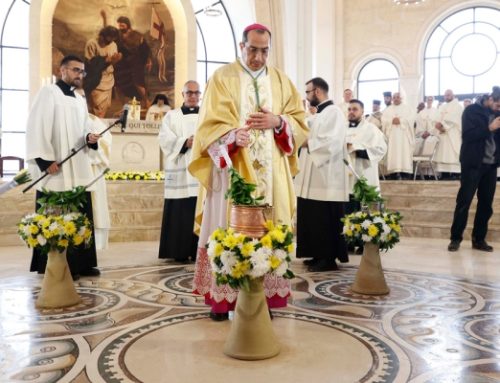
On the morning of January 6, the Greek Orthodox Patriarchate of Jerusalem begins its solemn procession, led by His Beatitude Patriarch Theophilos III of Jerusalem to Bethlehem. Young scouts, dressed in their traditional blue uniforms, play their instruments as they accompany the clergy, in a tradition that blends local heritage with centuries of Christian rituals.
As the procession enters Bethlehem, crowds gather along Star Street, the ancient road believed to have been walked by the Virgin Mary and her betrothed, Joseph. Similarly, clergy in bright crimson and gold vestments begin their slow walk towards the Church of the Nativity.
The essence of Orthodox Christmas is the dawn prayer and Divine Liturgy, celebrated in the Catholicon of the Church of the Nativity. It is a service that resembles a revival of religious tradition. The hymns are ancient, some dating back to the early centuries of Christianity. The melodies are deep and resonant. They fill the space of the church, reverberating off the stone walls and marble floors and even the pilgrims themselves, mingling with the columns of incense and the smoke of beeswax candles.
During the service, the Patriarch and priests descend into the Grotto of the Nativity, the place where Jesus was born and laid in a humble manger. This year, the Patriarch was accompanied by representatives from Greece, Jordan, and Palestine, underscoring the diplomatic and spiritual significance of this annual religious event.
Around the silver star beneath the cave, pilgrims gather to travel back in time to the place where life and the mystery of incarnation began, the place of birth. Many weep, all kneel, while some stand in awe. It is a moment where time becomes blurred, where the story of a baby in a manger does not seem like a story from the past, but a reality unfolding in the present.
Twelve days later, Bethlehem celebrates Christmas again, the third and last of the season, according to the Armenian Apostolic Church calendar, beginning with a procession similar to the previous ones, led by the Armenian Patriarch from Jerusalem to Bethlehem, carrying with him the blessing of holy water. With the end of this celebration, the Christmas season in the city of Christmas comes to an end, reminding visitors that Christmas in the Holy Land is not a single day but a journey.
By Heba Hrimat | jerusalem-patriarchate.info